Let’s say we have the following code:
LegacyList* pMyList = new LegacyList(); ... pMyList->ReleaseElements(); delete pMyList; In order to fully delete an object we need to do some additional action.
How to make it more C++11? How to use unique_ptr or shared_ptr here?
Intro We all know that smart pointers are really nice things and we should be using them instead of raw new and delete.
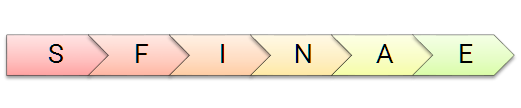
This time I’d like to tackle a bit more complex problem: SFINAE. I’m not using this paradigm on a daily basis, but I’ve stumbled across it several times and I thought it might be worth trying to understand this topic.
What is SFINAE? Where can you use it? Do you need this on a daily basis?
Maybe I’ll be boring with this note, but again I need to write that this was another good year for C++!
Here’s a bunch of facts:
Visual Studio 2015 was released with great support for C++14⁄17 and even more experimental features. Long-awaited GCC 5.0 was released at the beginning of the year.
My short summary for non static data members initialization from modern C++. A very useful feature. Should we use it or not?
Intro Non-static data member initializers Paper N2756 Visual Studio Since VS 2013 GCC Since GCC 4.7 Intel Compiler Since version 14.
I’ve finally got my copy of “Effective Modern C++”! The book looks great, good paper, nice font, colors… and of course the content :)
While skimming through it for the first (or second) time I’ve found a nice idea for a factory method. I wanted to test it.
The idea In the Item 18 there was described how to use std::unique_ptr and why it’s far better than raw pointers or (deprecated) auto_ptr.
This was a good year for C++!
Short summary (language features):
Clang supports C++14 GCC supports C++11 and most of C++14 (Full support in upcoming GCC 5.0) Intel 15.0 supports C++11 (some features on Linux/OSX only) Visual Studio tries to catch up with C++11, but it also introduces C++14 features as well… and it become (almost) free!
Some time ago I’ve seen an inspiring talk from CppCon 2013: “C++ Seasoning” by Sean Parent. One of the main points of this presentation was not to use raw loops. Instead, prefer to use existing algorithms or write functions that ‘wraps’ such loops. I was curious about this idea and searched for nice code examples.
Let us consider a simple task:
“Use a worker thread to compute a value”.
In the source code it can look like that:
std::thread t([]() { auto res = perform_long_computation(); }; Now, you would like to obtain the result when the computation is completed. How to do it efficiently?
C++11 conformance
GCC 4.81 - 100% Clang 3.3 - 100% Intel 14.0 - 84% Visual C++ 2013 - 66% Another year is almost over so it is a good time to check what is going on with C++. This time more stats and real data compared to my post from the previous year.
// how does it work? auto i = 0; // ??
C++11 brings us a very useful set of tools. It adds fresh air to the hard life of a programmer. The updated syntax makes the language a more modern and easier to use.
In this post let’s take a quick look at a nice keyword ‘auto’ that, at first sight might seem very simple.
The C++ Standard Library: A Tutorial and Reference (2nd Edition)< />
We are still waiting for some more books about new C++ standard. Fortunately for us, some authors managed to write books even before C++11 is well “domesticated”. One of such examples is the book mentioned in the title of this post.
Mister C was a cool guy. C could make amazing things with just ordinary text files. He used to grab bunch of them and produce magic binary forms. He could make a spinning cube, web server, or even an operating system.
One time he was running through a plain header file.