Welcome to new C++ Links - most important and useful articles, podcasts and videos that happen between 20th and 26th of October.
Today you will find a link to the easiest papers for San Diego Meeting, an article that explains why adding unused method may have a performance impact and many more!
Welcome to new C++ Links - most important and useful articles, podcasts and videos that happen between 13th and 19th of October.
Today you will find links to all proposals that will be discussed in the upcoming Standard Committee meeting in San Diego, a video explaining why C++ is not an object-oriented programming language and many more!
In September our local C++ User Group started a “new year” of meetings after a little break in August. I had a pleasure to give a talk about string operations in C++17.
Here are the slides and additional comments.
The Talk For my book I wrote a lot of content about string_view, std::searcher and std::to_chars, std::from_chars and I wanted to make a short summary of those features.
Welcome to new C++ Links - most important and useful articles, podcasts and videos that happen between 6th and 12th of October.
Today you will find a link to Core Guidelines rules about Concepts, a long article about C++17 class template deduction and a video that shows how inline keyword is taken into account by the compiler.
Welcome to new C++ Links - most important and useful articles, podcasts and videos that happen between 29th September and 5th of October.
In this week you will find two trip reports from CppCon, an article about std::any (aka modern void*), a video about std::fmt library and many more!
Registration for code::dive - biggest C++ conference in Poland - is open!
Welcome to new C++ Links - most important and useful articles, podcasts and videos that happen between 22th and 28th of September.
This week CppCon took place - the biggest C++ conference. In today’s list, you will find the first video from there, about future of C++, you can also see a post about removing duplicate elements from associative containers and an example of really defensive programming.
Welcome to new C++ Links - most important and useful articles, podcasts and videos that happen between 15th and 21st of September.
Today you will find a link to post about “same but different” objects in C++, a video showing what code compiler generates when you write a lambda, article about why you should always capture exception by const reference and many others.
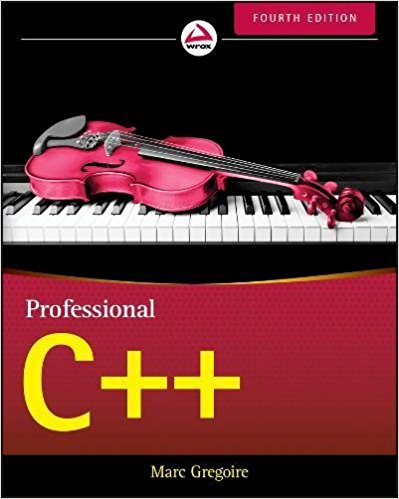
As usually, C++ needs good books and up-to-date learning resources. In this review, I’d like to present a book that should significantly enhance your knowledge of Modern C++, including C++17.
Let’s see what’s inside.
Disclaimer: I asked the author and got a print copy for the review.
The book
Welcome to new C++ Links - most important and useful articles, podcasts and videos that happened between 8th and 14th of September. Today you will find a link to a post about the C++ quality of life features, a video with an explanation of the difference between const and constexpr, an article that describes some of SFINAE problems and many others.
I’d like to make an experiment on the blog and introduce a new simple series. Each Friday you’ll see a summary with valuable links and resources from the C++ World. The links and annotations are coming from a guest author - Wojciech Razik - one of the co-author of cpp-polska.pl.
I’m happy to present my first ebook on C++!
Here’s the short story and the description of what you can find inside.
The Story At the beginning of 2017, I decided to make a super long, collaborative, post about all the new things that are coming with C++17. At that time we had quite “stable” drafts, so most of the new features were already known.
How do you initialise a string member in the constructor? By using const string&, string value and move, string_view or maybe something else?
Let’s have a look at possible options.
Intro Below there’s a simple class with one string member. We’d like to initialise it.
For example:
class UserName { std::string mName; public: UserName(const std::string& str) : mName(str) { } }; As you can see a constructor is taking const std::string& str.